Rental scams in Cameroon: how to spot them and protect yourself

Geloka
5 min read
∙August 22, 2026
∙1538 readings
Price is your first detector
Almost every scam starts with an unusually attractive listing. A home better located, larger or more modern than the rest, at a clearly lower price. That is the bait, and it works because the tenant is in a hurry and the market is tight.
The protection is simply knowing the real prices. Across listings published on Geloka, the median studio rent is 90,000 FCFA in Douala and 67,500 FCFA in Yaoundé, with an observed floor around 50,000 FCFA in both cities. The detail is in our article on how much a studio costs in Douala and Yaoundé.
A simple rule: a modern studio advertised at 25,000 FCFA in a sought after part of Douala does not exist. If the price is half the market rate, it is not a bargain, it is a signal.
The five warning signs
| Sign | What it reveals |
|---|---|
| Price far below market | The classic bait. Nothing real is offered at that rate. |
| Fees demanded before viewing | No serious landlord charges to show a property. |
| Mobile money payment with no receipt | A transfer with no written trace is unrecoverable and untraceable. |
| Refusal to meet on site | The person has no access to the home they claim to rent out. |
| Pressure to decide immediately | Urgency exists to stop you checking anything. |
Any one of these justifies walking away. Two together leave no doubt.
The most common setups in Cameroon
The fake agent. Someone presents themselves as instructed by the owner, shows a property they accessed through a third party, collects the deposit and advance, then disappears. The real owner finds out when you turn up with your bags.
A variant documented in Yaoundé involves claiming to represent an official institution, a ministry or an administration, to create instant trust. The official title replaces verification.
The recycled listing. Photos of a real property, often copied from another platform, are used to create a fake listing. The home exists, but the person offering it has no connection to it.
Double collection. The same home is let to several candidates in the same month, each paying deposit and advance. Only one will get the keys, or none.
Phantom administrative fees. Viewing fees, reservation fees, file processing fees. None of these corresponds to a legitimate practice before a lease is signed.
Document harvesting. Some fake listings are not after your money but your identity documents, for later fraudulent use. Never send a copy of your national identity card before verifying who you are dealing with.
The rules before paying
- Always view the property. No photo, video or video call replaces an on site visit. A refused viewing ends the conversation.
- Verify who you are dealing with. Ask for identity documents and, if the person claims to act for the owner, a written authority. A legitimate intermediary has no reason to object.
- Never pay anything before the viewing. This single rule eliminates most cases.
- Demand a receipt for every sum paid, with the amount, date, purpose and a signature. A payment without a receipt cannot be claimed back.
- Avoid untraceable payments. A mobile money transfer to a personal number, with no signed written receipt alongside, proves nothing about what you paid or why.
- Be wary of urgency. "Three other people are interested" is the most used line to prevent verification.
- Talk to the neighbours. Five minutes with a neighbour or a local shopkeeper is often enough to learn who really owns the property.
What every payment must include
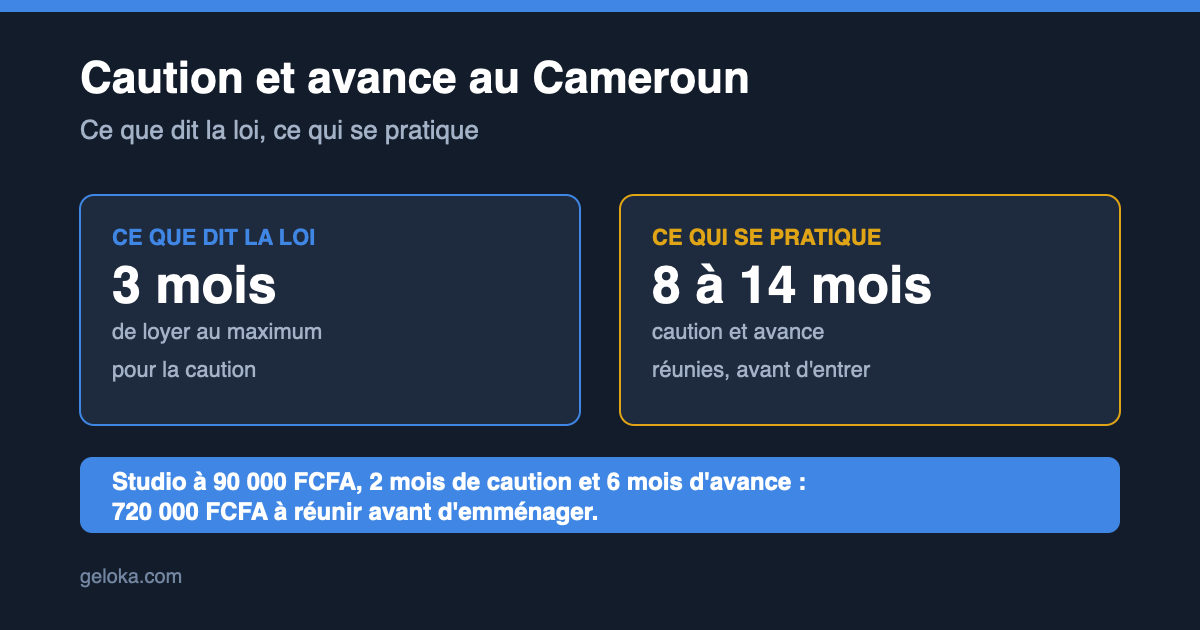
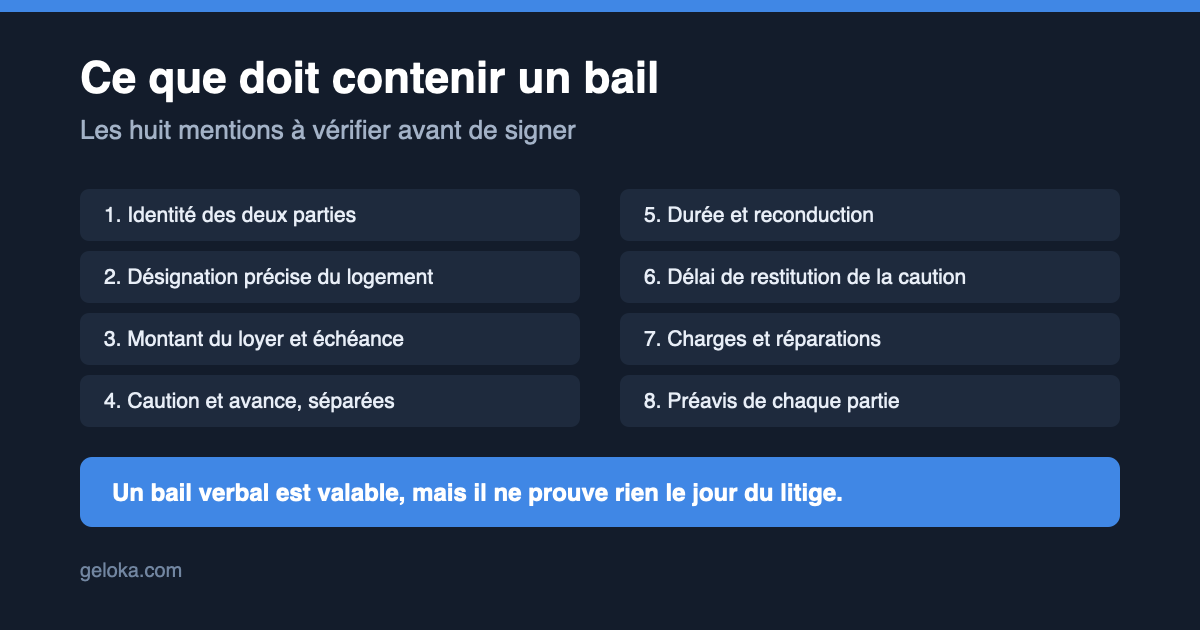
When paying the deposit and advance, demand a receipt that clearly separates the two sums. A single lump receipt with no breakdown will leave you without an argument the day you claim your deposit back. The rules governing these payments are set out in our article on deposit and advance rent in Cameroon.
Also check that the person collecting the money is the one signing the lease, and that their name matches the identity document shown.
If you are caught out
Gather every trace immediately: a screenshot of the listing, written exchanges, the number used, transfer proofs, receipts, the identity claimed. These disappear fast, as fraudulent listings are taken down quickly.
File a complaint with the police station or gendarmerie brigade. If payment went through mobile money, report it to the operator without delay: every transaction is tied to an identified number.
Finally, report the listing to the platform hosting it. It will not recover your money, but it prevents others from falling into the same trap.
Frequently asked questions
How do you spot a fake rental listing?
The first clue is a price well below the market. Then come fees demanded before the viewing, refusal to meet on site, insistence on an untraceable payment method and pressure to decide within the hour.
Should you pay viewing fees?
No. No serious landlord or intermediary charges to view a property. A request for fees before the viewing is a scam signal.
Is paying by mobile money risky?
The payment method itself is not the problem, the lack of proof is. If you pay by mobile money, demand a signed written receipt alongside, stating the amount, date and purpose.
How do you check that an agent is authorised?
Ask for their identity document and the owner's written authority. You can also ask neighbours who the real owner of the property is.
What if you have already paid?
Gather all evidence, file a complaint with law enforcement and report the transaction to your mobile money operator. Also report the listing to the platform concerned.
Key takeaway
A rental scam always rests on two levers: a price that is too good and a manufactured urgency. Knowing the real rents in your city neutralises the first, and refusing to pay before viewing neutralises the second.
No money should leave your hands before you have seen the property, verified who you are dealing with and obtained a written receipt.
Join our newsletter
Receive weekly updates about Geloka